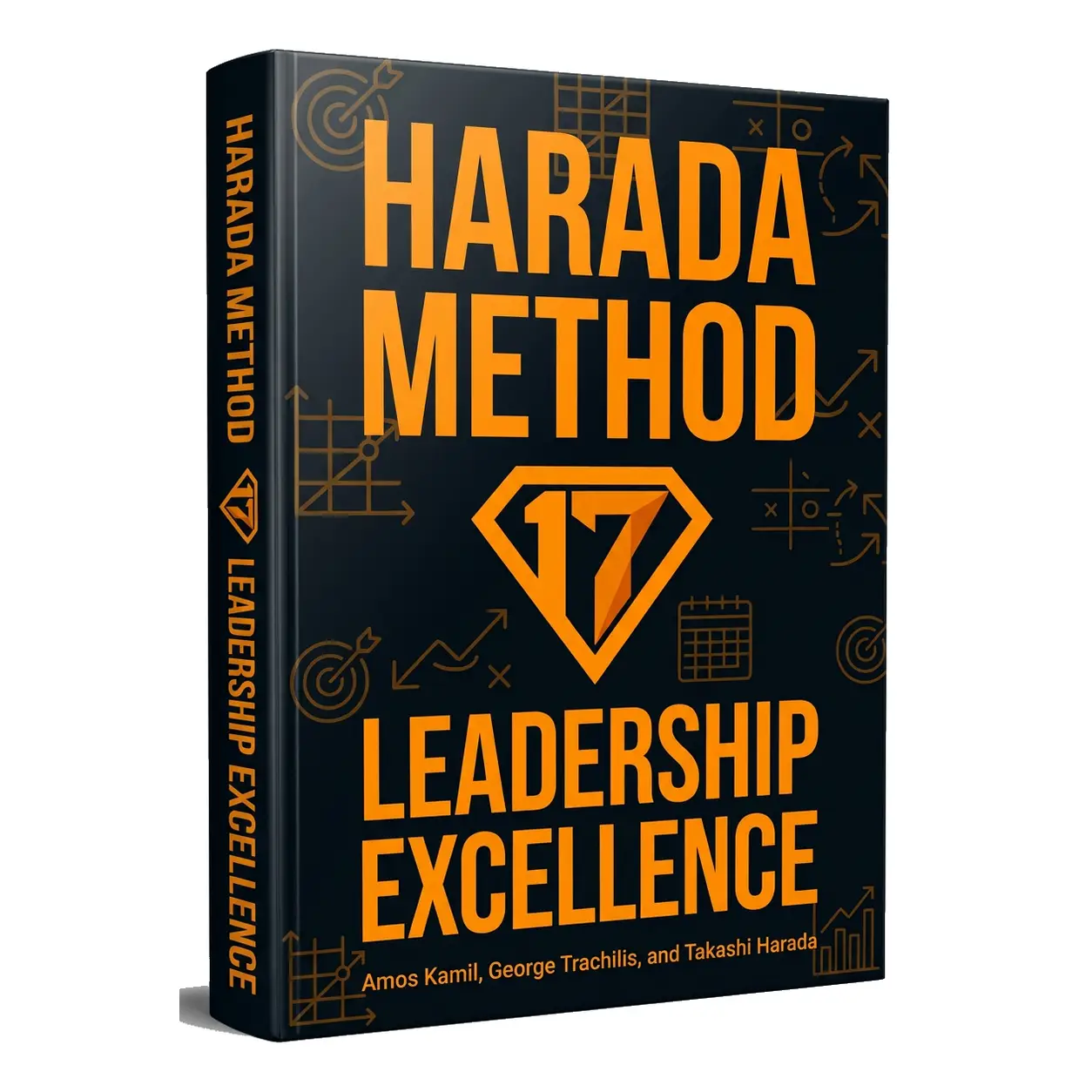
Develop the discipline, self-reliance, and leadership capability to become a Certified Practitioner or Coach in the Harada Method or Leadership Excellence.
SELF-RELIANCE
DISCIPLINE
LEADERSHIP
PRACTICE
TRANSFORMATION
A practical journey to develop self-reliance, turn meaningful goals into daily action, and help others grow.
Whether you are a teacher guiding students, a coach leading a professional sports team, an executive developing your organization, a professional in industry, or a consultant supporting clients, the Harada Method provides a structured approach to developing yourself and the people you influence.
Discover your purpose. Define your direction.
Connect your goals with what matters most. Through guided coaching, develop the mindset, confidence, and sense of purpose to pursue meaningful achievement. Build the mind through clear thinking and strengthen the heart through commitment to yourself and others.
Turn intention into action and action into growth.
Apply the Harada tools in your daily work, teaching, or coaching. Build disciplined habits, reflect on your progress, and develop the confidence that comes from following through. Share your growth through a Hero’s Journey report-out as you work toward Certified Practitioner status.
Develop yourself. Empower others. Extend your impact.
Pursue Certified Coach status and develop the capability to guide others toward their goals. Bring the method into your classroom, team, or organization, or build a consulting practice. Help those you influence strengthen their minds, lead with heart, and take ownership of their development.
The Harada Method is a Japanese goal‑achievement system that builds confidence and results through disciplined daily habits rather than talent or motivation alone. It teaches individuals to set a meaningful long‑term goal and break it down into small, consistent actions practiced every day, developing self‑trust, resilience, and sustainable success. Major League Baseball star Shohei Ohtani famously used the Harada Method’s structured goal‑setting approach as a teenager, demonstrating how daily discipline can compound into world‑class performance.
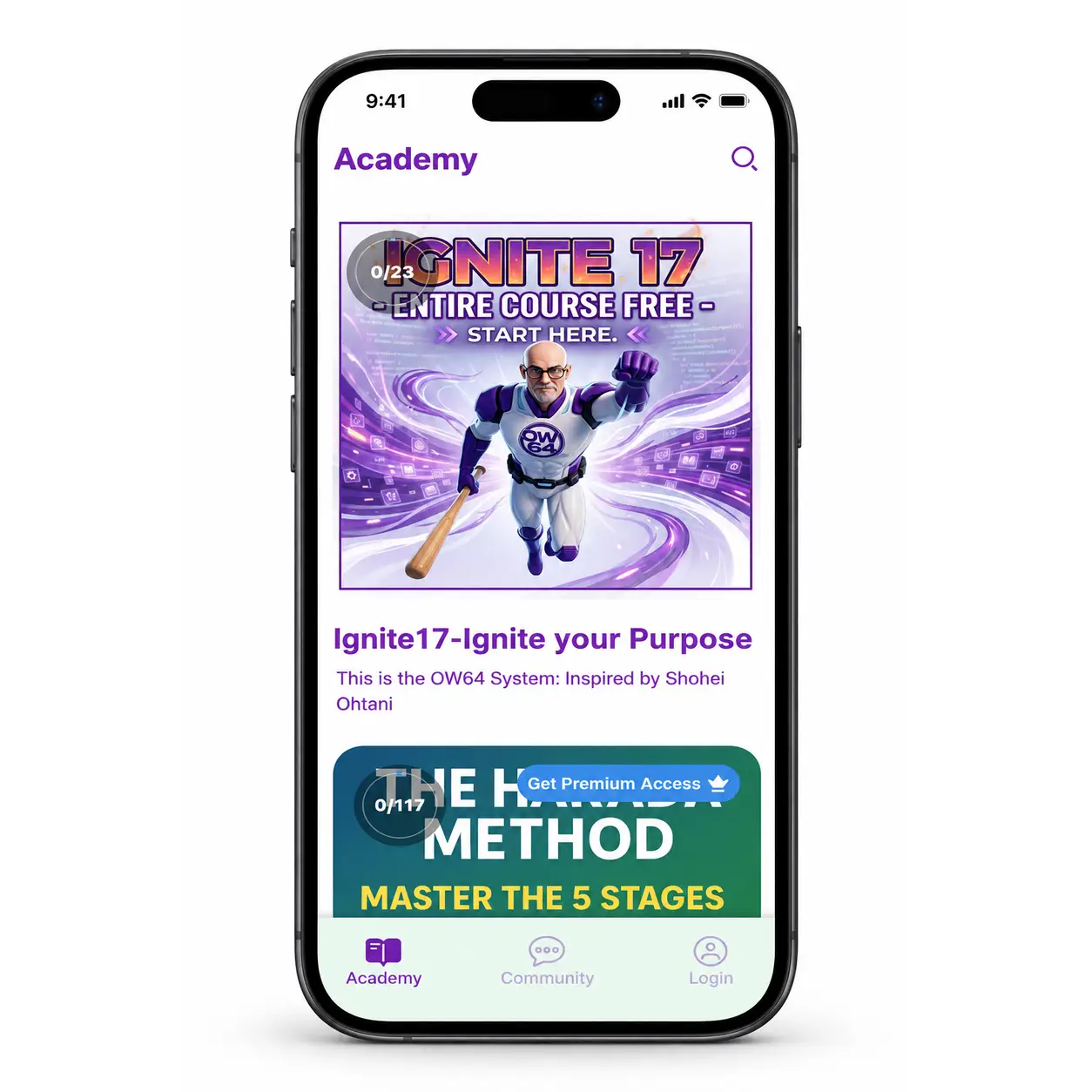
The OW64 App is the authorized Harada Method digital platform designed to help individuals turn goals into daily practice through structured planning, behavior tracking, and reflection. It brings the Harada system to life by guiding users through the same disciplined process used to build self‑trust and long‑term results. By downloading the OW64 app, users can access and download the five core Harada forms identified in the book, making it easy to apply the method consistently in everyday life. The app is available free for educators teaching students, supporting schools and classrooms that want to build discipline, responsibility, and belief through daily practice.
A clear and practical journey designed to build dacigine, real-world experiance, and lasting transformation
Each learning track Harada Method and Leadership Excellence-offers the same three development paths
An introductory path for executives and leaders who want to understand and apply the principles before pursuing certification.
Develop yourself through guided coaching, practical application, and reflection. Then learn to help others build self-reliance, strengthen their minds, and lead with heart.

COO of Cornerstone Building Products
"Becoming a Lean leadership and Harada coach revealed the power of continuous improvement beyond work alone. With the support of the Harada Method, I developed greater discipline, adaptability, and clarity -strengthening my ability to lead both professionally and personally."

Engineering Capital Programs Director, Dart Container
I was in chaos not visible chaos, but functional chaos. I was moving, but not intentionally. The Harada Method didn't give me motivation; it gave me a system. I stopped trusting my feelings and started trusting structured daily discipline. Failure became feedback instead of a verdict. The all-or-nothing mindset had to die so a systematic man could live. This process didn't just prepare me for a 100-mile race it restored order to my leadership, my family life, and my identity.

Operations Manager, Pandora
"Working with George and completing the Leadership Excellence Program has been a transformative experience for our team at Pandora, the largest online jewelry store. The program provided us with actionable tools and strategies that elevated how we lead and work together. By embracing continuous improvement and aligning our goals, we've strengthened collaboration, boosted performance, and unlocked new levels of success. It's been an invaluable journey-fueling our growth as individual leaders and as a high-performing team."

COO of Superior Plastic Products
"Becoming a Lean leadership and Harada coach revealed the power of continuous improvement beyond work alone. With the support of the Harada Method, I developed greater discipline, adaptability, and clarity -strengthening my ability to lead both professionally and personally."
Our program welcomes anyone aged 15 and older who is committed to personal growth and meaningful success. Whether you are a student, teacher, sports coach, executive, industry professional, or consultant, the starting point is the same: develop yourself so you can positively influence others.
Developed in Japan by educator Takashi Harada, the Harada Method is a Japanese approach to mind-building and self-reliance. It helps you clarify your purpose, strengthen your character, and turn meaningful goals into daily action. You may already know that Shohei Ohtani completed an Open Window 64, or OW64, goal-planning chart when he was 15.
While the method can be introduced through team sessions, large classrooms, and keynote presentations, our coaching programs typically provide one-to-one coaching or small cohorts of fewer than five participants. This allows for individual attention, tailored feedback, and a personal connection as you apply what you learn.
Our network includes coaches and connections across many professions and areas of life. If your needs require expertise we do not have within our immediate team, we will work to find someone who does. If you prefer an in-person connection, we may also have a coach near you, depending on your location and availability.
Whatever your role, you begin as a learner. Great coaches begin as great students. You develop the habits and understanding to support your own growth before guiding others.
Personal growth begins with your commitment to learning. A coach can guide, challenge, and support you, but cannot make that commitment for you. You must be willing to reflect honestly, receive feedback, and practice new behaviors.
Once you make that commitment, a coach becomes a trusted partner who listens carefully, seeks to understand your perspective, challenges limiting assumptions, and helps you turn insight into action.
Harada Method 17 calls patterns of inner resistance QAOS, or Quiet Agents of Sabotage. You may recognize them in thoughts such as:
These patterns can keep you busy preparing, avoiding, or doubting instead of progressing. Your coach helps you recognize them, question them, and choose a more constructive response.
You may be tempted to set aside a promise to yourself. A commitment shared with your coach is harder to quietly abandon. Regular check-ins make your progress visible and give you a place to address setbacks honestly. Accountability is not about disappointing your coach. It is about becoming someone you can rely on.
This experience also prepares you to guide others. You learn what it means to listen, ask useful questions, give constructive feedback, and support meaningful change.
Great coaches begin as great students. Coaching helps you practice both.
Acceptance into the program is not automatic. We begin with a free 30-minute assessment meeting to understand your goals, ask thoughtful questions, and discuss your readiness to commit to personal development. If the fit is right and you are enthusiastic about improving, we will match you with an appropriate coach.
The Awareness program includes eight weekly, one-hour coaching meetings. These sessions are personal and tailored to you as a learner, with guidance focused on your goals, questions, and practical application.
Your coach will introduce the Harada Method’s five forms and explain how to use them together:
You will also explore common implementation mistakes and learn from examples of successful application. There is time to ask questions, discuss challenges, and connect the tools to your own circumstances.
Plan for one hour of coaching each week, plus time between sessions to practice and reflect. Your coach will help you establish a manageable routine suited to your goals. The value comes not only from attending the meetings, but from applying what you learn.
The Awareness pathway lasts eight weeks. The Practitioner and Coach certification pathways each follow a 17-week structure when all requirements are completed successfully on the first attempt. Their requirements are explained in the next answer.
Executive Coaching and Awareness provide personalized guidance. Certified Practitioner and Certified Coach require you to demonstrate what you can consistently do.
As explained in the previous answer, Executive Coaching through the Awareness pathway includes eight weekly, one-hour meetings tailored to your goals. The certification pathways take that learning further, first through your own application and then through your ability to guide others.
The Certified Practitioner program includes 17 weekly coaching meetings, concluding with a Hero’s Journey report-out.
During the first 13 weeks, you learn and apply the method. Your coach determines the appropriate balance between instruction and practice based on your needs, understanding, and progress. You are not simply studying the tools. You are using them to develop yourself.
Beginning in Week 14, you complete four consecutive weeks of daily execution:
If you miss a day in either practice, you restart the four-week execution period. This means your certification journey may take longer than 17 weeks.
The purpose of this requirement is to practice following through even when enthusiasm fades or life becomes busy. Within our program, the uninterrupted four-week period is a demonstration of consistency, not a claim that every habit forms within four weeks.
Much of everyday behavior is influenced by habits and familiar cues rather than a fresh, deliberate decision each time. Repetition can make actions more automatic, which is why developing supportive routines matters. However, the claim that exactly 97% of behavior is subconscious and 3% is conscious is not an established scientific division. (apa.org)
Our aim is to help you build a more deliberate future. You choose the actions that support your goals, practice them consistently, and reflect on what happens. The Daily Diary invites you to examine your choices. The Routine Check Sheet makes your follow-through visible.
Together, these practices are designed to strengthen your attention, accountability, and confidence in your ability to keep commitments.
Restarting does not erase your learning. It gives you another opportunity to demonstrate the consistency required for certification.
Your Practitioner journey concludes with a presentation to other coaches.
This is your opportunity to share where you began, the challenges you faced, the changes you made, and the successes you achieved. It is also a chance to share the joy of progress with people who understand the work behind it.
You and your coach are partners in your success. You are responsible for your effort, honesty, and daily commitments. Your coach shares responsibility for guiding your learning, providing useful feedback, and helping you address obstacles.
The complete commitment includes your learning, uninterrupted execution period, and final report-out.
The Certified Coach program also follows a 17-week structure, with a requirement to teach three students.
Your supervising coach follows your work with one of those students and serves as a second coach to that learner. You receive support with organizing the learning journey, delivering instruction, responding to challenges, and developing your coaching skills.
To qualify as a Certified Coach, your observed student must meet the Certified Practitioner requirements and graduate. Your supervising coach must also be satisfied with your progress and capability as a coach.
This is a supported partnership. You are learning to coach while an experienced coach helps you and your student progress toward the required standard.
Once your student graduates and your supervising coach confirms your readiness, you present your coaching journey to George Trachilis, the creator of this coaching program.
Your report-out demonstrates what you learned as a coach, how you supported your student, and how you responded when learning or execution became difficult.
You will also have an opportunity to pursue Certified Partner status with the Harada Education Institute in Japan.
The goal is to become a trusted coach and self-reliance educator, capable of helping others turn meaningful goals into consistent action.
As the Harada Method reaches more people around the world, your ability to guide its practical application can contribute to students, teams, organizations, and communities.
This journey is about your success and the success you help make possible for others.
It begins with a free conversation with George Trachilis, the creator of this coaching program. You will discuss your dreams, aspirations, current challenges, and what you hope to achieve.
Acceptance is not automatic. This conversation helps George understand your readiness, identify a suitable pathway, and determine whether the program can support your goals. It also gives you an opportunity to ask questions and decide whether the approach feels right for you.
You do not need polished answers. You do need to be honest about what you want and what you are prepared to commit to.
The timing is flexible, allowing you and George to explore what matters most.
Here’s what George normally asks:
“How did you hear about the Harada Method, and what steps brought you to this meeting?”
Think about what first caught your attention and why you decided to reach out.
“What would you most like to achieve, and why is it important to you now?”
Be ready to share your dreams and what meaningful success would look like for you.
“Beyond your own success, who will benefit from what you learn, and how could your growth make a positive difference in their lives or in society?”
Consider your family, students, colleagues, team, or community. The benefits may be intangible but deeply meaningful, such as greater trust, confidence, independence, stronger relationships, or inspiring others to pursue their potential.
“What has held you back, and what happens when your motivation fades?”
Consider patterns such as perfectionism, overplanning, self-doubt, or abandoning routines. We call these QAOS, or Quiet Agents of Sabotage. Recognizing them helps your coach understand where you may need support.
“Are you willing to receive honest feedback and try a different approach when something is not working?”
Think about how you respond to challenges and whether you are ready to discuss both progress and setbacks openly.
“How will you make time for coaching and daily practice?”
Review your schedule and consider what could interfere with your commitment. If certification interests you, be ready to discuss how you would meet the weekly and daily requirements.
“Which pathway interests you most, and why?”
Consider Executive Coaching through Awareness, Certified Practitioner, or Certified Coach. You do not need to decide beforehand. George will help you explore which option best matches your goals and readiness.
There will also be time for your questions, your coaching preferences, and a discussion of next steps.
A good fit is not about having the biggest dream or the most experience. It is about having a meaningful reason to grow, a willingness to learn, realistic availability, and the commitment to apply what you learn.
Your development also has the potential to benefit others. We want to understand not only what you hope to achieve, but how your learning could contribute to the people and communities around you.
The goal is a shared decision about a pathway you understand, a commitment you can make, and coaching that supports your aspirations.
Schedule Your Free Meeting with George Trachilis