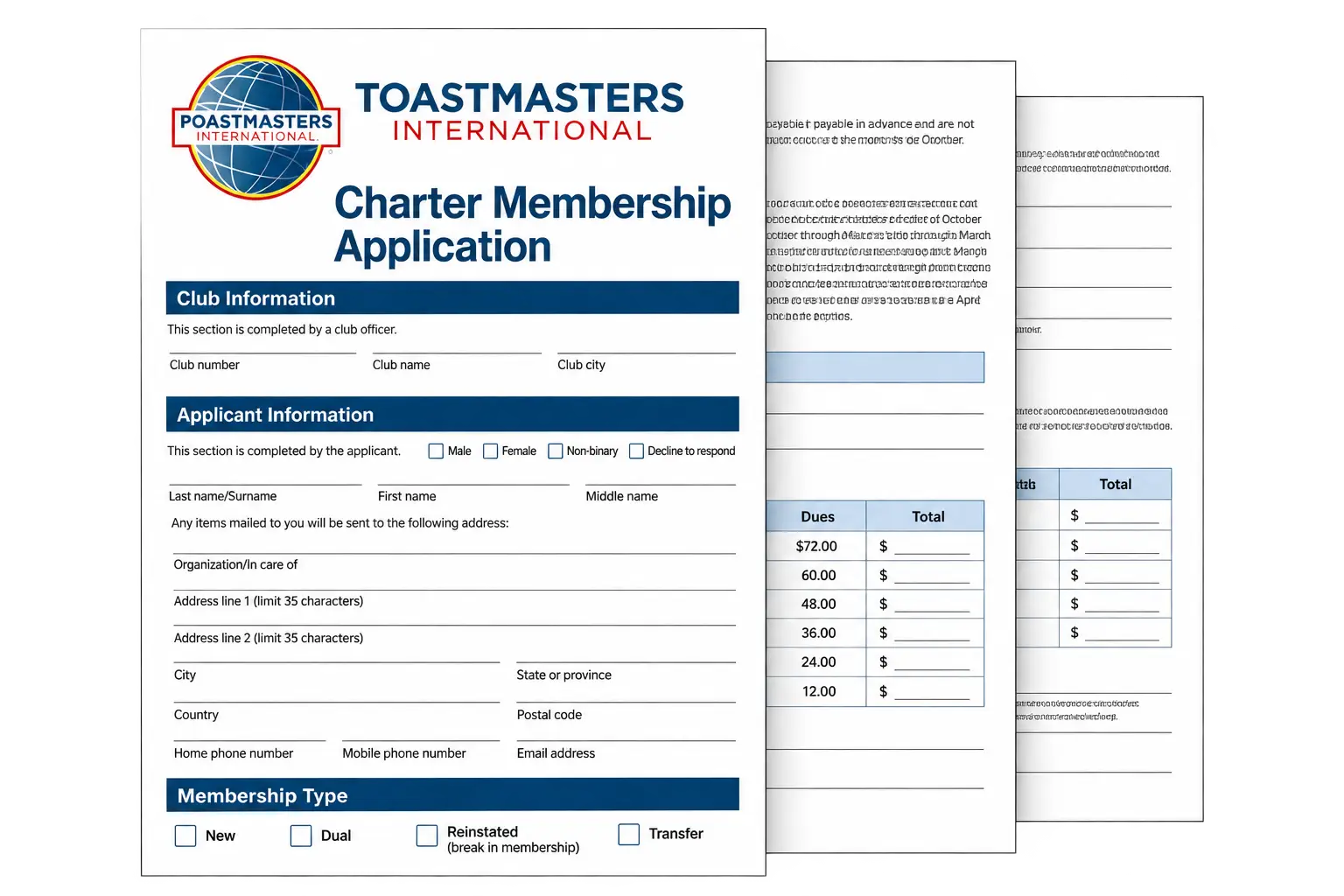
Complete your Toastmasters membership application and take the next step toward becoming a charter member.
The Harada Method Toastmasters Club began as Saint Nazario-Camacho’s dream to bring together two powerful paths of personal development: the communication and leadership practice of Toastmasters, and the discipline, reflection, coaching, and self-reliance of the Harada Method. After years in aerospace engineering and technology, Saint recognized how important structure, daily habits, and disciplined reflection are to long-term success. Through his own journey with Toastmasters and the Harada Method, he saw an opportunity to create a club where people could practice speaking, build confidence, receive coaching, and learn how to help others grow. This club is more than a meeting place — it is Saint’s vision for a supportive community where members develop themselves first, and then, when ready, coach and develop others.
This video introduces the heart behind the club: Saint Nazario-Camacho’s personal leadership journey and the dream of creating a place where people can grow themselves and eventually help others grow too.
This video explains why Toastmasters and the Harada Method naturally belong together, creating a unique learning environment for stronger communicators, leaders, and coaches.
This video highlights the purpose and invitation of the club. Anyone can join — whether you are a Toastmaster, coach, educator, student, professional, or simply looking to grow.
Dana explained that Toastmasters is much more than a place to practice speeches. It is a leadership development organization where members learn by doing. Through meeting roles, officer roles, mentoring, evaluations, and club service, members practice real leadership in a supportive environment. Toastmasters helps people build confidence, communicate clearly, support others, and grow into leaders through repeated practice.
Dana emphasized that Toastmasters is a volunteer organization, which makes its leadership lessons especially powerful. Members cannot rely on rank, title, or command authority. Instead, they must learn to influence, listen, encourage, organize, communicate, and motivate others. This teaches a deeper form of leadership — one based on trust, service, and example rather than position.
Dana shared that a niche club works when members are united by a meaningful common interest while still following the proven Toastmasters structure. In the case of the Harada Method Toastmasters Club, the shared focus is coaching, self-reliance, success, discipline, and leadership. This gives members a clear purpose while still allowing them to benefit from Toastmasters’ educational system, meeting structure, and supportive learning environment.
George described the Harada Method as a system for building self-reliance through goals, daily practice, reflection, and disciplined habits. It helps people move beyond simply being motivated and gives them a structure for turning intentions into action. The method helps individuals define success, create routines, reflect on progress, and build confidence through consistent effort.
George explained that the Harada Method and Toastmasters fit together because both are based on practice. Toastmasters gives people a place to practice speaking, leadership, mentoring, and feedback. The Harada Method gives people a structure to practice discipline, goal achievement, self-reflection, and coaching. Together, they create a powerful environment where people can grow personally while also learning how to support the growth of others.